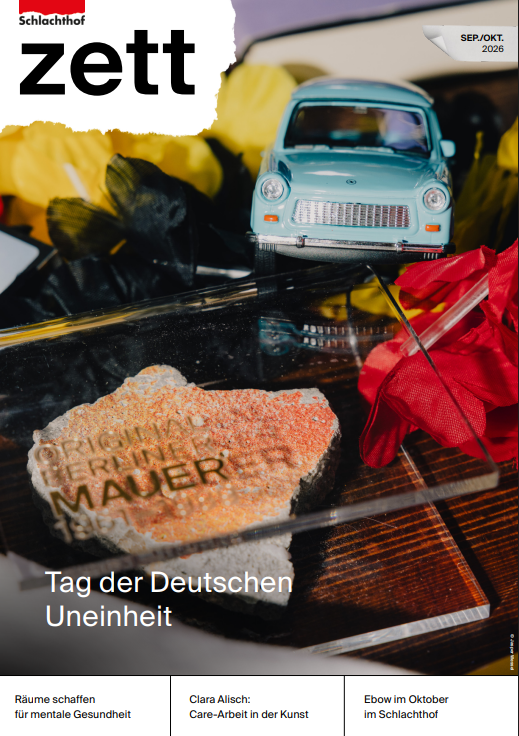
Tag der Deutschen Uneinheit?
Interview mit Hadija Haruna-Oelker

The Z-Magazine has accompanied the Schlachthof since culture has been offered in the beautiful brick building, i.e. for over 40 years. Originally it was called Schlachthof-Zeitung, then Zett (wie Zeitung), now Z-Magazin. But despite changing names, one thing has always remained the same: The editorial team is open, and everyone can join in. The topics and their realisation are decided together with the authors.
The editorial section of the newspaper is always devoted to a cultural theme. By this we mean more than theatre, film, music and painting. We also deal with urban development, football or Low German. The second part of the magazine contains detailed announcements of concerts, readings, theatre, festivals and projects taking place at the Schlachthof.
Z-Magazin is published every two months and is available free of charge in cafés, pubs, libraries, community centres, cinemas, shops and theatres. It is also enclosed with the taz Bremen.
If you want to know when the next editorial meeting is or what the next topic is, you can write us an email or call us. Previous experience is not necessary, but the desire to write is.
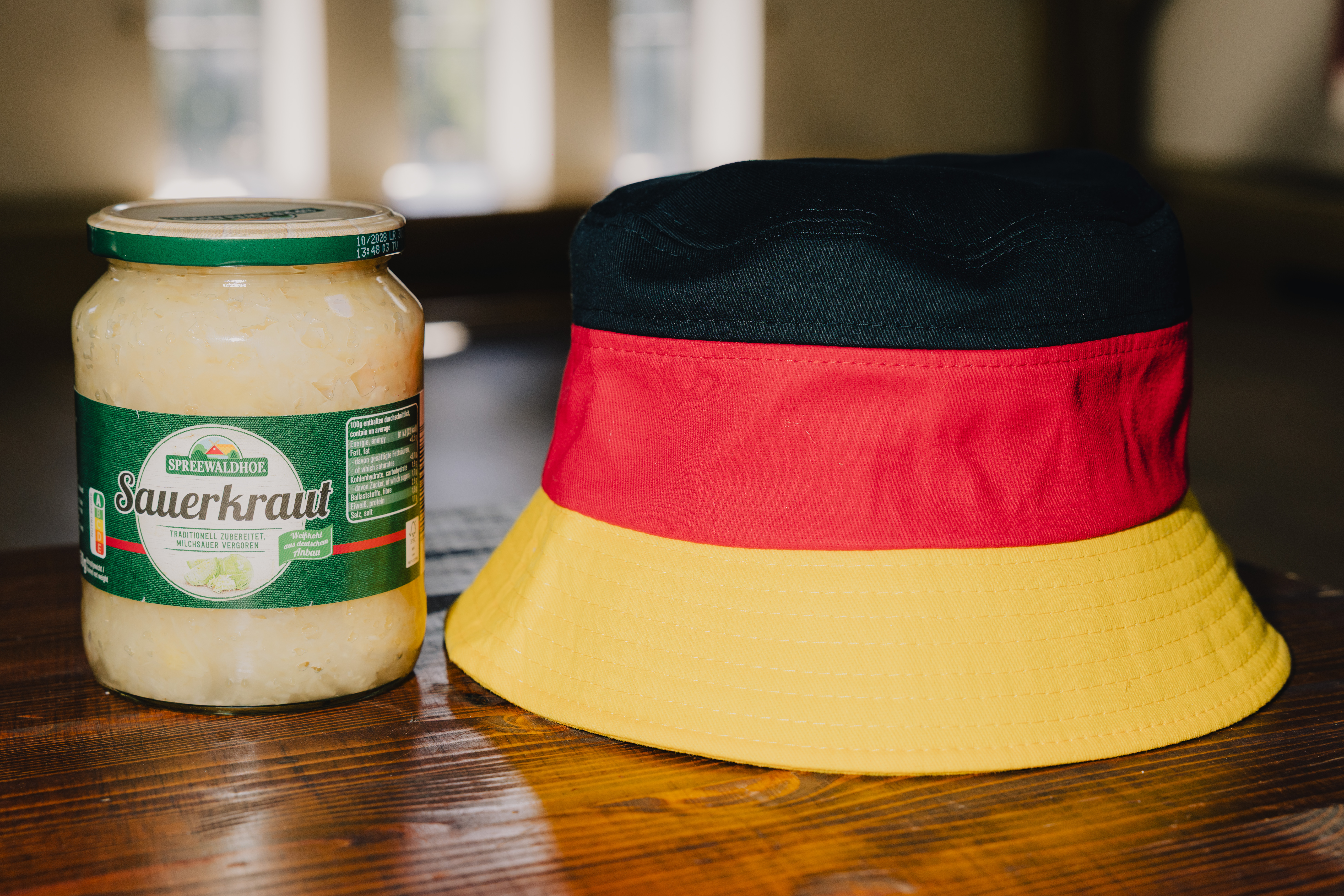
vom 2. bis zum 4. Oktober finden die zentralen Feierlichkeiten zum Tag der Deutschen Einheit wieder in Bremen statt, zuletzt war das 2010 der Fall. Die ganze Republik schaut auf das kleinste Bundesland, doch bei aller Einheitsfeierei ist ein kritischer Blick im Sinne einer pluralen Erinnerungskultur nicht verkehrt. In Interviews und Darstellungen sprachen mit Autorin Hadija Haruna-Oelker darüber, welche Leerstellen durch fehlende Perspektiven erzeugt werden und welche Auswirkungen eine ausschließlich positive Erzählung über die Einheit mit sich bringt, gerade in Zeiten erstarkender rechter Parteien.
Auch sonst hält diese zett-Ausgabe einiges aus dem Stadt- und Kulturleben Bremens bereit. Der WDR hat das Ende des Radiosenders Cosmo beschlossen, der zusammen mit Radio Bremen produziert wird. In ihrem Artikel ordnet zett-Autorin Maike Partey die Lücke ein, die dadurch entsteht. Lea Schlußmeier schreibt über drei Bremer Projekte, die zeigen, dass Unterstützung für das psychische Wohlbefinden viele Gesichter haben kann. Der Artikel „Wie schmeckt eigentlich Muttermilch?“ beschäftigt sich mit der Bremer Künstlerin Clara Alisch und damit, wie bei Themen rund um Care-Arbeit in ihrer Kunst abgebildet und hinterfragt.
Viel Spaß beim Stöbern wünschen
Angelina Kluge und die zett-Redaktion